


Children have the least control over the planet’s future, but will also be the most affected as it changes. They may well feel the mental toll of the “futility gap”: when individual actions feel meaningless against broader societal inaction on the climate crisis.
Promoting healthy – the belief that we are in control of our lives – is fundamental here. There are things that we can do to combat the crisis. Children should be supported so they don’t lose hope. Together with our colleague Kari?ki Wer?, we’ve created a guide to how adults can help support their healthy psychological development.
the severity of climate change while grounding children in hope. We aim to transform feelings of helplessness into self-efficacy – a belief that they can take action.
At home
To protect a child’s emotional wellbeing and talk about climate facts, adults also need to learn how to . This should involve adults listening, learning together and using language appropriate to their child’s age and comprehension. Schools and communities could help parents by .
Monitoring a child’s online activity can safeguard them from traumatic news. Parents can emphasise progress and solutions, and help their children spend time experiencing and enjoying changing weather and the environment.
At school
Schools, educational methods and children’s relationships with teachers and their classmates are core influences on the development of their psychological agency. To promote climate resilience, this could mean moving beyond traditional rote learning towards age-appropriate “”. This means empowering students to question existing systems and imagine fundamental transformations, rather than feeling defeated by the status quo.
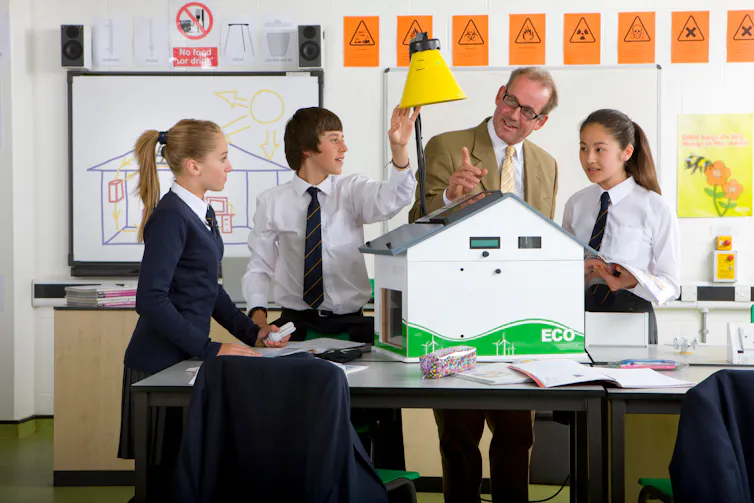
Young people can be empowered to focus on solutions. Air Images/Shutterstock
Nature-based outdoor learning can further strengthen this development. It can both boost mental health and transform abstract climate concepts into tangible experiences. Learning outdoors can , and directly link human actions to environmental and sustainable solutions. Outdoor observations and investigative projects bridge the gap between learning and action.
The world online
Digital climate learning is a powerful catalyst for modern education. It offers interactive and global perspectives on the climate crisis. But internet “” – when algorithms show viewers only information that aligns with their past interests. This can risk isolating and overwhelming children with repetitive content that affects their wellbeing. When used correctly, digital tools can on beyond their local environment.
Blended together
Effective climate education can combine digital learning with hands-on, real-world experiences. When this is supported by educators and caregivers who act as guides – while also leaving enough space for children to explore and create independently – children are able to benefit from both realistic and . are blending classroom science with digital tools and outdoor experiments to turn student ideas into tangible community projects.
On a wider scale, climate education needs to bridge the gap between personal responsibility and collective power. The climate narrative should shift its focus from asking “what is wrong?” to “what can we do?” This will empower children with a sense of agency rather than climate anxiety. Social media is a key place where t.
When used with adult guidance and digital literacy, it can lead to constructive dialogues and evidence-based action. A of digital tools can help children connect their own awareness to the world around them and drive action on a larger scale to truly tackle the climate crisis.
This can ultimately allow children to share their climate change knowledge and inspire actions among family and friends. They can go on to become influential at .
In order to address the climate crisis and support wellbeing, we need to help children recognise their agency. Children can become agents of change and .
Schools can work together with families, communities and leaders to create a supportive environment for learning about climate. could bridge the gaps between scientific climate facts and real-life experiences by providing the emotional care and practical skills needed to empower_ the climate generations to build a sustainable future together.
This article is republished from under a Creative Commons license. Read the
Suggested citation: Dr. Sanae Okamoto, Nidhi Nagabhatla and Robert Oakes. "How adults can help children move from climate anxiety to resilience," 海角社区, 海角社区-MERIT, 2026-03-30, /merit/article/how-adults-can-help-children-move-climate-anxiety-resilience.


